Mobile RV Generator Repair Across Florida
Starting faults, output faults and the transfer switch between them are three different repairs. We diagnose all three where the coach is parked.
An RV generator that will not start and one that runs but produces no power are two unrelated repairs. Starting faults are fuel, battery and ignition. Output faults are the regulator, the windings or the transfer switch downstream of them. The first useful measurement is voltage at the generator's own output terminals, because that single reading decides which half of the problem you are in.
Why will an RV generator crank but not start?
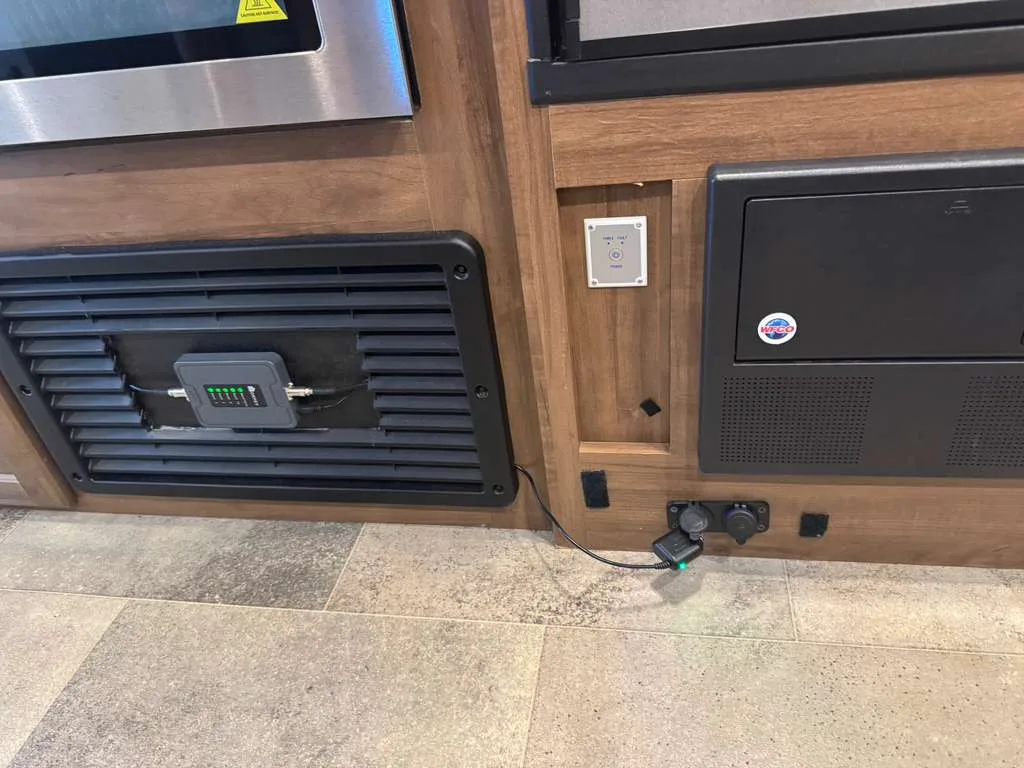
Almost always fuel delivery, and almost never the engine itself, because these engines do very little work for the hours they log.
The most common cause in this state is a carburetor left standing with fuel in it. Modern gasoline separates and gums the small passages in a carburetor within months, and a generator that sat through a Florida summer unused is the classic case. It cranks, it has spark, and nothing reaches the cylinder.
The second is the fuel pickup. Most gasoline sets draw from the coach tank through a tube that stops well above the bottom, so the generator runs out of fuel while the dash gauge still reads a quarter tank. That is a design feature rather than a fault, and it strands people regularly.
The third is the start battery circuit, which on many coaches is not the battery owners assume it is.
What does it mean when the generator runs but nothing works?
It means the engine is fine and the fault is somewhere between its output terminals and the coach panel.
This is the single most misdiagnosed generator complaint, because from inside the coach it is indistinguishable from a dead generator. The engine noise tells you the mechanical side is working, and nothing else about the situation is visible from the living space.
There are four candidates and they separate quickly. The generator's own circuit breaker may have tripped, which is a reset. The voltage regulator or the windings may have failed, which is a repair at the set. The feed cable may have failed. Or the automatic transfer switch may not be handing the supply over.
One measurement at the output terminals separates the first two from the last two, which is why it is always the first thing done.
How does the transfer switch fit into this?
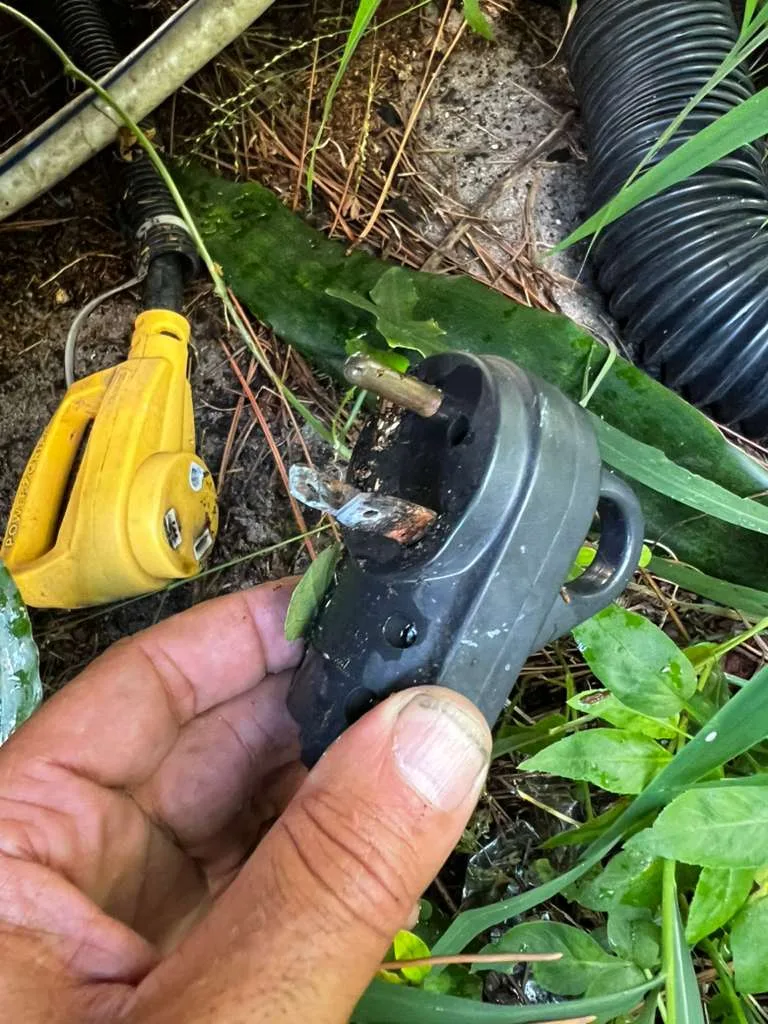
It decides which supply reaches the coach, and it fails quietly enough that the generator gets blamed for it.
Shore power and generator power both pass through this one part, and it holds one set of contacts closed while the other stays open. That interlock is a safety function: it is what stops a running generator back-feeding a campground pedestal.
Its signature failure is partial power. On a fifty-amp coach it carries two legs, so one set of contacts can burn out while the other still makes, and half the outlets keep working. A burnt smell in that bay is a reason to shut everything down rather than to keep testing.
Most automatic switches also delay before handing over, so a generator started and shut off again within that window looks broken when it is not.
What does Florida do to a generator that sits?
Heat, humidity and long idle periods, and the idle periods do more damage than the running hours.
A set that runs regularly circulates fuel, keeps its carburetor wet and keeps a film of oil on the cylinder wall. One that sits for six months does none of those. The fuel separates, the carburetor gums, moisture collects in the crankcase and rodents find the wiring loom, which in this state is a genuine and frequent failure mode rather than a joke.
The cure is running it under load once a month for a reasonable stretch. Under load matters: idling a generator with nothing switched on does not warm it enough to drive off moisture and can glaze the bore over time.
That single habit prevents most of the calls we run in the spring. It is also the cheapest maintenance on the coach.
How often should an RV generator be serviced?
By hours rather than by years, and the hour meter is the number to work from because coaches vary enormously.
The service items are oil and filter, air filter, spark plugs and the fuel filter, and the manufacturer publishes an interval for each. A full-timer running air conditioning off the generator daily will reach those intervals in a season; a weekend owner may take several years.
What is not on the hour meter is the annual work. The exhaust and its mounting need inspecting for corrosion regardless of hours, because a leaking exhaust inside a coach bay is a carbon monoxide problem rather than a performance one.
Manufacturer schedules for the common sets are public, and we work to them rather than to a generic interval. Working to the published schedule also matters for any warranty still in force, since a service history is what a claim is judged against.
Is a generator worth repairing on an older coach?
Usually yes, because the parts that fail are the serviceable ones and the expensive assemblies rarely wear out first.
Carburetors, fuel pumps, starters, control boards, regulators and brushes are all replaceable, and none of them is close to the cost of the set. Engines and alternator windings do fail, but they are the minority of what we find when a generator stops.
The point where the argument changes is a set that has been sitting for years with unknown history. Once you are replacing a carburetor, a fuel pump and a control board on the same visit, the arithmetic starts to favor a replacement unit.
The other honest consideration is noise and weight. Owners replacing a very old set often want a quieter or inverter-type unit anyway, and that is a legitimate reason on its own.
What about carbon monoxide and where the generator vents?
It is the part of this job that is not negotiable, and it gets checked on every visit whatever the complaint was.
Generator exhaust has to leave the coach and stay left. A corroded pipe, a loose clamp or a cracked manifold inside a sealed bay puts combustion products where people sleep, and carbon monoxide has no smell to warn anyone. Coaches are also frequently parked with the exhaust facing an awning or a neighboring rig.
The detector is the second half of it. Carbon monoxide alarms have a service life of their own and expire whether or not they have ever sounded, and we find expired ones regularly.
Any generator fault that involves the exhaust stops being a convenience repair at that point, and it is treated accordingly. Replacing an out-of-date alarm costs very little and is the last thing anyone should defer.
What should you check before calling us out?
Four things, and any of them can turn a service call into a five-minute fix you do yourself.
Check the fuel level against the quarter-tank cutoff, because a generator that stops at a quarter tank is behaving exactly as designed. Check the generator's own circuit breaker, which is on the set rather than in the coach panel and is easy to miss.
Then start it and wait a full minute before deciding nothing happened, because the transfer delay is normal. Finally, look for a burnt smell or discoloration in the transfer switch bay - if you find one, stop and leave the coach off both supplies.
Our generator troubleshooting guide works through the same order in more detail, and our electrical service covers what sits downstream. Between them those four checks resolve a real share of the calls that come in as a dead generator.
What Does Mobile RV Generator Service Cost?
These are typical ranges for mobile service across Florida. A brief description of what's included is in the Notes column.
| Service | Typical Range | Notes |
|---|---|---|
| Service call (trip + 1st hour diagnosis/labor) | $299 - $399 | All-in for getting us to your site + first hour on any job. Exact rate confirmed at booking; varies by location. |
| Tune-up (oil, filter, spark plug) | $145 - $320 | Onan, Generac, Cummins; all makes |
| Carburetor clean / rebuild | $185 - $480 | Stale-fuel issues; most common service call |
| Fuel pump replacement | $175 - $450 | Mechanical or electric fuel delivery |
| Automatic transfer switch (ATS) | $280 - $680 | Relay-type; load tested after |
| Control board replacement | $380 - $1,100 | Brand-specific; Onan HDKAJ and similar |
| Full Onan overhaul | $850 - $2,500 | Rings, valves, carburetor; rebuilt in situ |
| Propane generator conversion service | $200 - $600 | Conversion kit and fuel rail tuning |
Service call (trip charge + first hour) is $299-$399 depending on location - confirmed when you book. Repair line items below are national averages for mobile service (2025 data) and represent labor + parts after the first hour. Call (888) 702-6880 for an exact quote.
Generator questions RV owners ask us
Why does my generator shut down after a few minutes?
Most often it is overheating or a low oil cutout doing its job. Both are protective shutdowns rather than faults, and both point at maintenance - a blocked cooling intake, a clogged air filter, or oil that is low or long overdue. Repeated shutdowns should never be reset and ignored.
Can I run the air conditioner on my generator?
It depends on the set's rating against the starting surge of the compressor, not its running draw. A single rooftop unit is within most RV generators; two units, or one unit plus a microwave, is where an undersized set trips. A soft start on the air conditioner changes that arithmetic considerably.
Is it bad to run the generator with no load on it?
Occasionally it is fine and as a habit it is not. A set that only ever idles never gets hot enough to drive off moisture, and over time light loading glazes the cylinder bore. Exercising it monthly with a real load on it is the version that actually preserves it.
Why does my generator work but the coach still has no power?
That points downstream of the generator, most often at the automatic transfer switch or the feed to the panel. The tell is whether shore power also fails - both supplies pass through the same switch, so both being dead at once is a strong hint at that one part.
Do you service diesel generators as well as gasoline?
Yes. The diagnostic order is the same, though diesel sets fail differently - fuel contamination and injector or lift-pump problems rather than gummed carburetors. They also tolerate standing better, which is one of the reasons owners of larger coaches prefer them.
How long does a generator repair take at my site?
Most are finished in a single visit, because the parts that fail are the ones we carry or can source locally. A winding or engine failure is the exception and turns into a scheduled return, since those are ordered rather than stocked.
Sources
- Cummins Onan - RV generator set manual - Manufacturer service intervals, fault codes and shutdown behavior for the common RV sets.
- Cummins Onan - quick start and exercise guidance - Manufacturer guidance on exercising a set under load rather than at idle.
- OSHA - electrical hazards - Background on working near energized conductors, which is what output diagnosis involves.
- US Fire Administration - fire prevention - Why exhaust and fuel-system integrity in an enclosed bay is a safety matter, not a performance one.