RV Pre-Purchase Inspection Across Florida
An independent look at the coach before your money moves, at the seller's location, with a written report you can hand to the seller.
A pre-purchase inspection is not a pass or fail. It is a priced list of what the coach will need, which is the only thing that tells you whether the asking price is fair. Most inspections find something. What decides the purchase is whether those findings are maintenance you expected or structural work the seller has been avoiding.
What does an inspection actually tell you?
What the coach will cost you after you own it, which is a different question from whether it works today.
Almost every used RV has findings. A ten-year-old coach with nothing on the list has usually been inspected badly rather than maintained perfectly, and an experienced buyer treats a clean report with more suspicion than a long one.
The useful output is a list with figures beside it. Sealant that needs redoing this season sits in one column, a soft floor sits in another, and the two are not comparable even when the repair estimate happens to be similar.
That distinction is the whole value of the exercise. You are not buying a verdict on the coach, you are buying the information that lets you decide what it is worth to you and what you are prepared to take on.
What do we find that the seller will not mention?
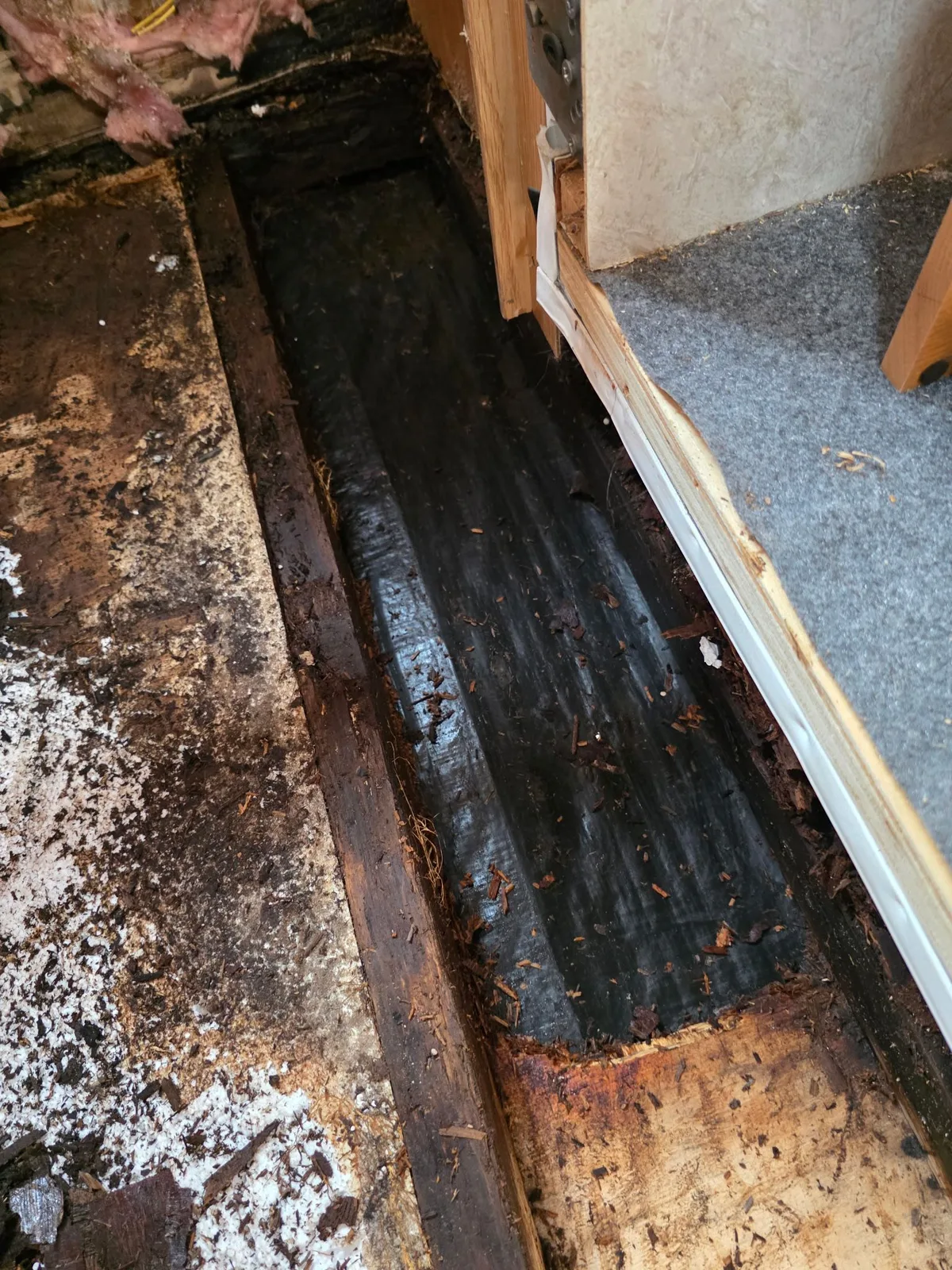
Water, in the places a walkthrough does not reach, and it is the one finding that reliably changes what a coach is worth.
A seller is often telling the truth when they say there are no leaks. The stain they would have noticed appears on the ceiling panel years after the water first got in, and by then the decking above it has been wet for several seasons.
So the inspection goes to the places water arrives first: the seams and fittings on the roof, the slide-out perimeter, the corners of the underbelly, and the cavity behind the fridge.
A moisture meter reads through the panel where a torch and a hand cannot, which is why a survey finds in an hour what an owner missed for two years.
What is each finding worth in the negotiation?
Roughly what it will cost to put right, and the report exists so you can say that number out loud instead of guessing at it.
Sealant, a tired water heater, an appliance at the end of its life and worn tires are all ordinary. They are worth raising because they are real money, but they are the cost of buying a used coach rather than a reason to abandon one.
Structural findings behave differently. Soft decking, delamination and a slide-out that has been forced repeatedly are open-ended, because nobody can price the full extent until it is opened up.
That is why the report separates the two. A seller will usually meet you on the first list. On the second, the honest position is that neither of you knows the number yet.
When is the right answer to walk away?
When the findings are structural, undisclosed, and the seller wants the price to stay where it is. Any two of those is a conversation. All three is an answer.
Water that has reached the floor is the clearest case. Once decking has gone soft the repair opens up walls, and coaches routinely reveal two or three times the damage that was visible at the survey.
A history that does not match the coach is the other one. Slide seals replaced on a low-mileage unit, fresh sealant over failing sealant, or a repaint on one wall are all signs of something being covered rather than fixed.
There is no shortage of used RVs in Florida. Walking away from one costs you an inspection fee, and it is the cheapest money you will spend all year.
Why does buying in Florida change the checklist?
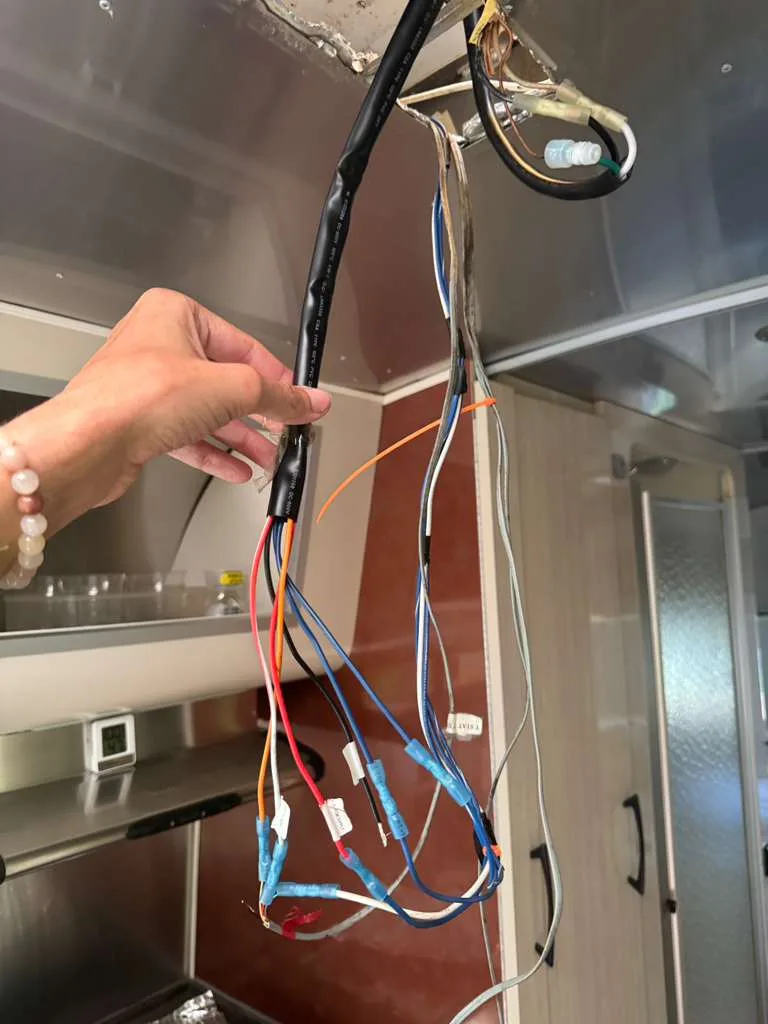
Because a coach that has sat in this heat and humidity has aged in ways that mileage does not show.
Ultraviolet ends membranes and sealants faster here than the manufacturer's intervals assume, so a roof with a Florida history needs judging on condition rather than on age.
Long stays on shore power are the other pattern. A coach that has been plugged in at a park for years may have low mileage and a converter, batteries and pedestal connection that have been working continuously the whole time.
And storm history matters. Coaches change hands after named storms, and impact damage that was patched rather than repaired is a specific thing to look for on any unit that has been through one.
What separates an inspection from a walkthrough?
Instruments, a written report, and somebody with no stake in whether you buy it.
A walkthrough confirms that things switch on. That is worth doing and it tells you almost nothing, because the faults that matter do not announce themselves in the ten minutes a system runs on a demonstration.
An inspection meters what a walkthrough looks at. Moisture readings through panels, appliances run long enough to reach temperature, the propane system pressure tested, and the electrical system checked under actual load.
The independence matters as much as the equipment. An inspector paid by the buyer has no reason to be diplomatic about what the coach needs, and that is precisely what you are paying for.
What do you do with the report afterwards?
Hand it to the seller. It is a more effective negotiating document than anything you could say yourself, because it is specific and it is not your opinion.
Sellers rarely dispute a metered reading. An argument about whether a roof needs work goes nowhere; a moisture reading beside a photograph of where it was taken ends the discussion in a sentence.
If the sale goes ahead, the report becomes your maintenance plan for the first year. The items that were not deal-breakers are still items, and they are now in a list with dates attached.
Keep it either way. If you walk away from this coach and inspect another one, having two reports side by side is the clearest way to compare what you are actually being offered.
When is an inspection not worth buying?
On a coach you have already decided to buy at any price, and on one cheap enough that the inspection is a meaningful share of the purchase.
Below a certain value the arithmetic stops working. If you are buying an older unit as a project and you expect to rebuild parts of it, you are paying to be told something you have already accepted.
It is also unnecessary on a coach still inside a manufacturer warranty with documented service history, where the dealer carries the risk you would be paying us to quantify.
Everywhere between those two, it is the best-value money in the transaction. On any coach worth more than a few thousand dollars, one finding usually pays for the inspection several times over.
What Does a Mobile RV Inspection Cost?
These are typical ranges for mobile service across Florida. A brief description of what's included is in the Notes column.
| Service | Typical Range | Notes |
|---|---|---|
| Service call (trip + 1st hour diagnosis/labor) | $299 - $399 | All-in for getting us to your site + first hour on any job. Exact rate confirmed at booking; varies by location. |
| Pre-purchase inspection (buyer's) | $195 - $420 | All systems; written report; coach-side |
| Pre-sale inspection (seller's prep) | $165 - $350 | Identify issues before listing |
| Annual / seasonal safety inspection | $145 - $300 | LP, electrical, roof, tires, safety devices |
| Pre-trip inspection (short-form) | $95 - $185 | Safety walk-through before a road trip |
| Insurance inspection | $145 - $280 | Documentation package; carrier-formatted |
Service call (trip charge + first hour) is $299-$399 depending on location - confirmed when you book. Repair line items below are national averages for mobile service (2025 data) and represent labor + parts after the first hour. Call (888) 702-6880 for an exact quote.
What buyers ask us before booking an inspection
Do you inspect at the seller's location?
Yes, and that is the point of a mobile inspection. The coach stays where it is, the seller does not have to move it, and you get the report without either party driving anywhere. It also means we see the unit in the condition it has actually been kept in rather than after it has been cleaned up for a handover.
How long does an inspection take?
Most of a day on a full-size coach, less on a smaller trailer. Appliances have to run long enough to reach temperature and the moisture survey cannot be rushed, so a quick inspection is usually a walkthrough with a better name.
Can I be there while you inspect?
Yes, and most buyers find it the most useful part. Seeing where a reading was taken, and why one finding matters more than another, tells you more than the written report does on its own. You are also free not to attend and we will walk you through it afterwards.
Will you tell me whether to buy it?
We will tell you what the coach needs and roughly what that costs. Whether that is acceptable depends on your budget and how you intend to use it, and those are yours to weigh. What we will not do is give a vague reassurance in either direction.
What if the seller refuses an inspection?
That is information in itself. Sellers with nothing to hide are generally fine with it, particularly since a clean report helps them sell. A refusal on a private sale is worth taking seriously.
Do you inspect coaches at dealerships?
Yes. Dealers are used to independent inspections and most will accommodate one. A dealer's own inspection is not a substitute, for the same reason a seller's walkthrough is not: it is not independent of the sale.
Sources
- InterNACHI - inspection standards - The professional standards of practice that a written inspection report is built against.
- EPA - moisture and mold - Why a moisture reading behind a panel matters more than what the surface looks like.
- Lippert Components - master manuals - Documentation for the slide-out, leveling and chassis components checked during an inspection.
- National Weather Service - Tampa Bay - Regional storm and rainfall record behind the Florida-specific checks described above.