Mobile RV Awning Repair and Replacement Across Florida
Fabric, arms, brackets and motors. Most of what we replace was damaged by weather that arrived while the awning was out and nobody was there.
Almost all RV awning damage is weather damage, and almost all of it happens while the awning is extended and unattended. Fabric is the cheapest thing to replace, arms and brackets are more involved, and a bent roller usually takes the whole assembly with it. The single habit that prevents most of it is rolling the awning in whenever you leave the site.
What actually fails on an RV awning?
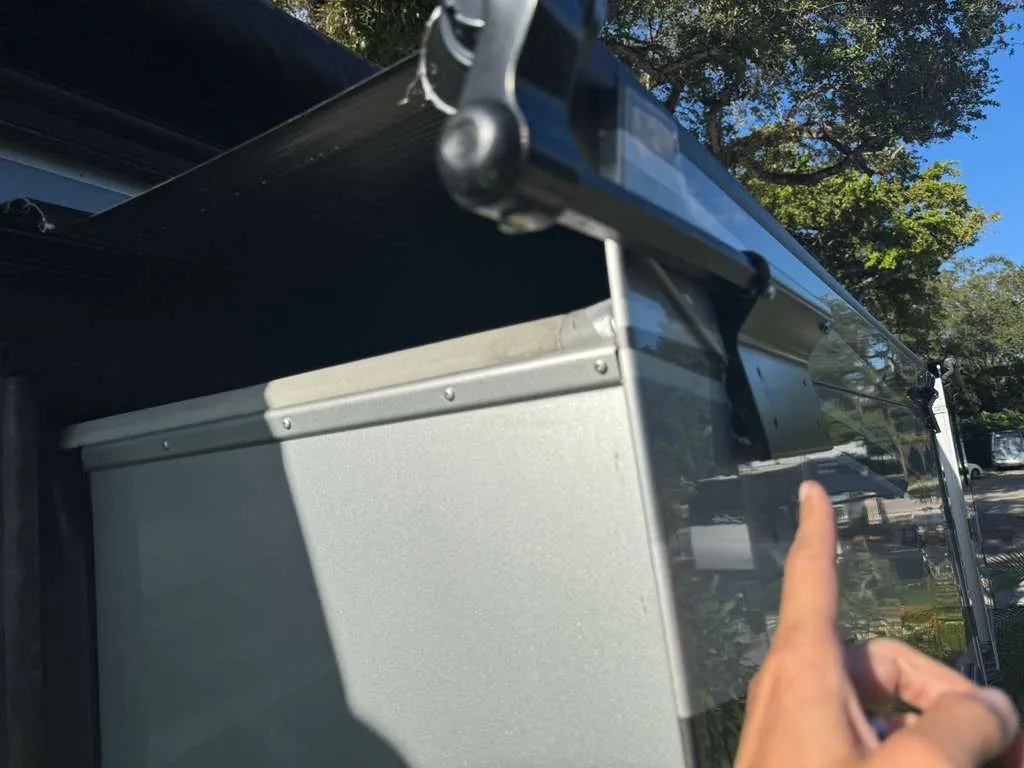
Fabric, arms, brackets, the roller tube and the motor, in roughly that order of how often we replace them.
Fabric fails from ultraviolet before it fails from use. It goes brittle, then splits along a fold or tears from the roller channel, and once it has started the tear runs. Fabric is the cheapest component and it is a straightforward replacement.
Arms and brackets fail from load rather than age. A gust that lifts an extended awning puts a huge force through the arm and into the sidewall, and the bracket is deliberately the part that gives. That is better than the alternative, which is the sidewall tearing.
The roller tube is the expensive one. A bent tube will not roll straight, and there is no straightening it - the assembly is replaced. A motor failure, by contrast, is usually just a motor.
Why does wind damage happen so often here?
Because Florida storms arrive fast and the awning is a sail bolted to the side of a lightweight vehicle.
An extended awning presents a large area to the wind, and it is anchored at only two points. A gust that lifts one corner converts the whole thing into a lever working on the sidewall, and the forces involved are far higher than the fabric area suggests.
The specific local problem is timing. Afternoon storms build in under an hour through the summer, and owners who left the site in clear weather return to find the awning has been out through one.
Automatic wind sensors help and they are not a substitute for rolling it in. A sensor reacts once the wind has already arrived, and by then the first gust has often already done the damage.
Can awning fabric be repaired rather than replaced?
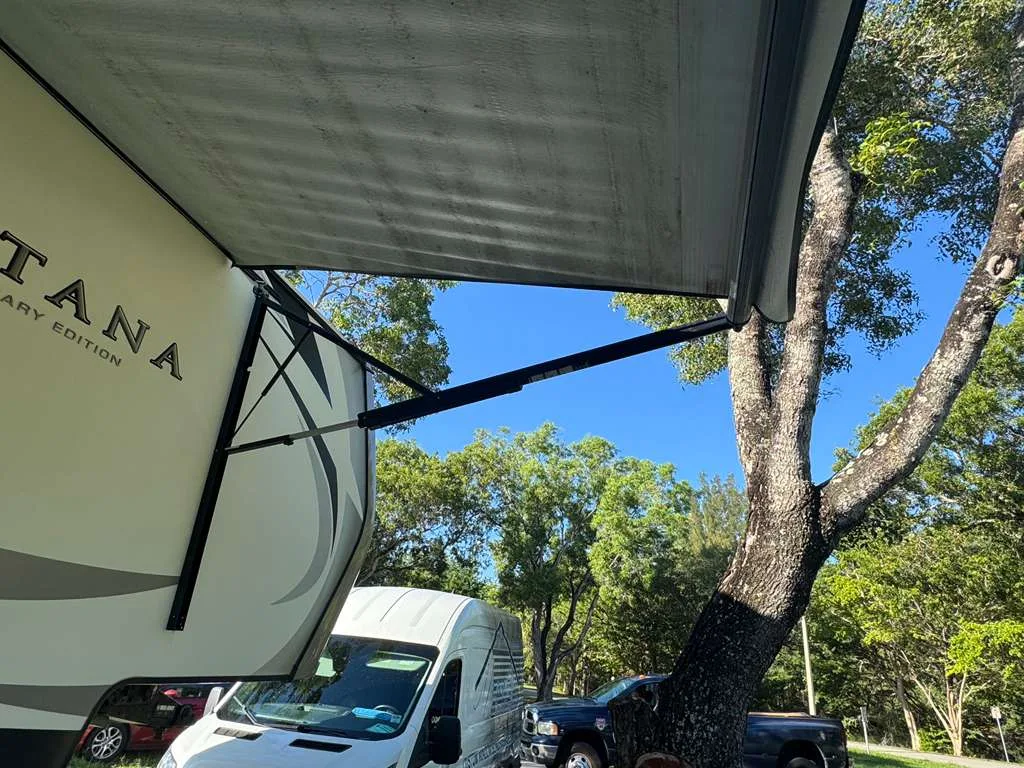
Small tears can be patched and it is worth being honest about how long that lasts on aged fabric.
A patch on fabric that is otherwise sound, away from an edge and away from the roller channel, is a reasonable repair and can last years. Repair tape designed for the purpose does a genuinely good job on that case.
A patch on fabric that has gone brittle with ultraviolet is a different matter. The material around the repair is already at the end of its life, so the next tear appears beside the patch rather than at it, and then again beside that.
The test is the fabric away from the damage. If it feels stiff and papery, or shows crazing when flexed, the awning is telling you it needs replacing rather than patching.
Why will my electric awning not retract?
Usually power or the controller rather than the mechanism, which is the same story as most powered items on a coach.
The motor draws heavily for its size, so a tired battery bank stalls it while everything else in the coach appears normal. Voltage measured while the switch is held is the reading that matters, not voltage at rest.
After that it is the fuse, then the controller or the wall switch, and only then the motor itself. A motor that hums without moving has power and a mechanical problem; one that is silent does not have power.
Every powered awning also has a manual override, and finding yours before you need it is worth the few minutes. An awning that cannot be retracted is a coach that cannot travel. Our electrical service covers the supply side in more detail, and it is where most of these calls actually end.
What is the right way to store an awning in this climate?
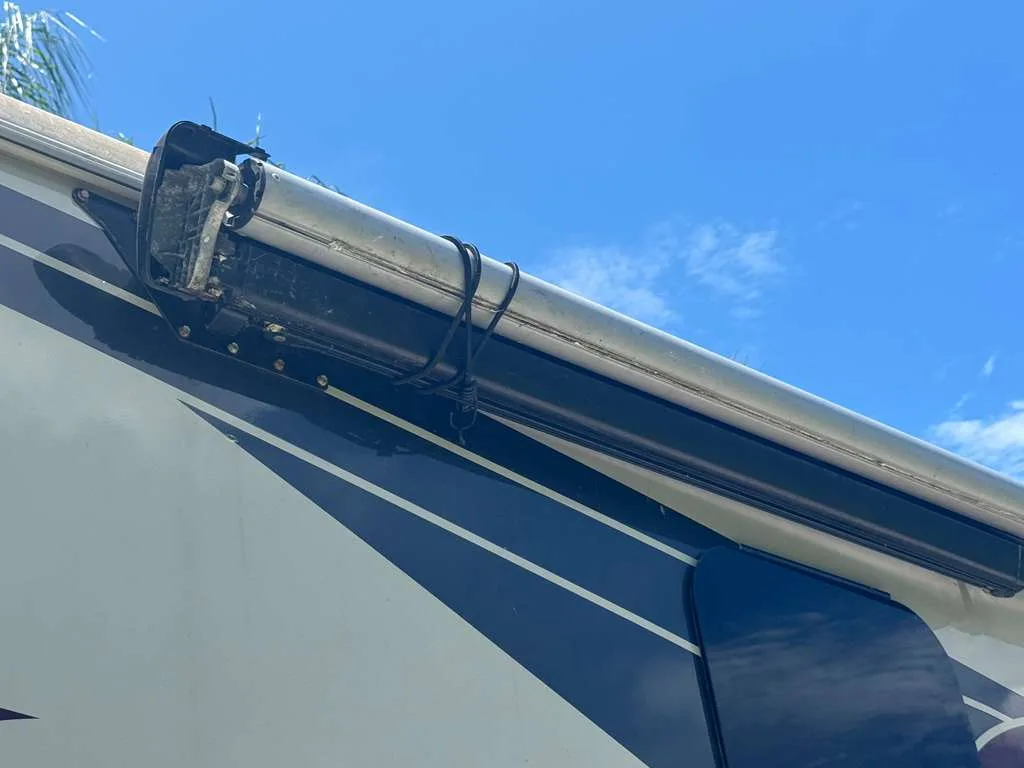
Clean and completely dry, and that second word is the one that costs people awnings here.
Fabric rolled away damp in Florida humidity grows mildew within days. It stains permanently, it weakens the material, and on vinyl it can bond the layers together so the awning tears when it is next unrolled.
So an awning that has been rained on gets extended again once the weather clears and left until it is genuinely dry, not merely not dripping. That single habit extends fabric life more than anything else.
For long-term storage, clean the fabric first, dry it fully, and roll it away. A cover over a stored awning protects it from ultraviolet, which is the other thing ending it. Both steps are free, and between them they are worth more than any product you can buy for the fabric.
How long should an awning last in Florida?
Fewer years than the same awning would give further north, because ultraviolet is what ends fabric and this state supplies a great deal of it.
Vinyl and acrylic both degrade with exposure. Acrylic generally handles ultraviolet better and breathes, which helps with the damp problem; vinyl is more waterproof and less tolerant of sun. Neither survives being left extended all season.
Usage pattern matters more than age. An awning that spends its life rolled away and comes out for weekends will outlast one on a coach parked seasonally with the awning permanently deployed, even if the second is younger.
The mechanical parts usually outlast several sets of fabric, which is why refabricating an otherwise sound awning is normally better value than replacing the whole assembly. It is also why the fabric is worth thinking of as a consumable rather than as part of the coach.
What about slide toppers?
They are awnings that never come in, so they age faster and they matter more than owners realize.
A topper keeps water, leaves and grit off the roof of a slide room. When it fails, that debris sits directly on the room, and the water then finds its way to the seals - which is how a torn topper becomes a leak that gets blamed on the slide.
Because they are permanently exposed, toppers reach the brittle stage sooner than a main awning does. They also tension against a spring that weakens over time, and a slack topper pools water rather than shedding it.
Replacing a topper is straightforward and considerably cheaper than the slide-out seal work that follows leaving it torn. Checking them at the same time as the main awning takes almost no extra effort and catches the problem while it is still fabric.
What should you do when the weather turns?
Roll it in, and do it before the wind arrives rather than while it is arriving.
The most common damage we are called out for happened in the thirty seconds after the first gust, while somebody was trying to retract an awning that was already lifting. At that point the fabric is loaded and the arms are being levered, and operating it makes things worse.
The practical rule is that the awning comes in whenever you leave the site, whenever you go to bed, and whenever the sky changes. None of those costs anything.
If it is already lifting, the safer move is to release the tension if you can do it safely and let it be damaged rather than putting a person under a loaded arm. Fabric is replaceable and people are not.
What Does Mobile RV Awning Repair Cost?
These are typical ranges for mobile service across Florida. A brief description of what's included is in the Notes column.
| Service | Typical Range | Notes |
|---|---|---|
| Service call (trip + 1st hour diagnosis/labor) | $299 - $399 | All-in for getting us to your site + first hour on any job. Exact rate confirmed at booking; varies by location. |
| Awning motor replacement | $195 - $480 | Carefree, Dometic, A&E; programmed in situ |
| Awning fabric replacement (main) | $380 - $950 | Measure, order, and install; one standard awning |
| Arm / bracket repair | $125 - $340 | Bent arm, broken knuckle, or pivot |
| Slide topper fabric (see slide-outs) | $320 - $850 | Per topper; slide-out section |
| Awning sensor / auto-retract | $145 - $310 | Wind sensor replacement or calibration |
| Window awning fabric | $165 - $380 | Per window; clamp-on and cassette types |
Service call (trip charge + first hour) is $299-$399 depending on location - confirmed when you book. Repair line items below are national averages for mobile service (2025 data) and represent labor + parts after the first hour. Call (888) 702-6880 for an exact quote.
Awning questions RV owners ask us
Can you replace awning fabric at a campground?
Yes, and that is where most of them are done. The roller comes down, the old fabric slides out of its channels and the new one goes in. What we need is space alongside the coach and a day without rain in it.
Is an acrylic or vinyl awning better here?
Acrylic handles ultraviolet better and breathes, so it dries faster and resists mildew, which matters a great deal in Florida. Vinyl is more waterproof and easier to clean. For a coach that lives here, acrylic is usually the better trade.
My awning sags in the middle. Is that a problem?
Yes, because a sag pools water and a pool is heavy enough to bend an arm or tear the fabric out of its channel. It is usually a stretched fabric or a weak spring, and one side is normally set slightly lower deliberately so water runs off.
Do wind sensors actually work?
They do what they claim, which is retract the awning once wind reaches a threshold. What they cannot do is anticipate a gust, so they reduce damage rather than preventing it. They are worth having and they are not a reason to leave an awning out unattended.
How much of an awning can be replaced separately?
Most of it. Fabric, arms, brackets, springs and motors are all available individually, which means a damaged awning is rarely a whole-assembly job. The exception is a bent roller tube, which usually takes the assembly with it.
Should the awning be out or in during storage?
In, clean and dry, and covered if possible. An awning left extended in a storage lot gets the full ultraviolet exposure with none of the benefit, and it is the fastest way to reach the brittle stage.
Sources
- Lippert Components - awnings - Manufacturer documentation for powered and manual awning assemblies and their overrides.
- Carefree of Colorado - RV awnings - Fabric options, wind sensors and slide topper documentation.
- National Weather Service - Tampa Bay - Regional storm patterns behind the afternoon gusts that cause most awning damage.
- EPA - mold and moisture - Why fabric rolled away damp in this climate grows mildew within days.