Mobile RV Appliance Repair Across Florida
Refrigerators, washer-dryer combos, microwaves, ranges and icemakers, diagnosed and repaired where the coach is parked - not where a shop wants it towed.
Most RV appliance faults are diagnosed and repaired at the coach in one visit. The exception is a failed absorption cooling unit, which is a sealed assembly that cannot be repaired and has to be swapped. The useful first question is always whether the appliance has power and gas reaching it, because a large share of calls turn out to be supply rather than appliance.
What RV appliances can actually be fixed at the campsite?
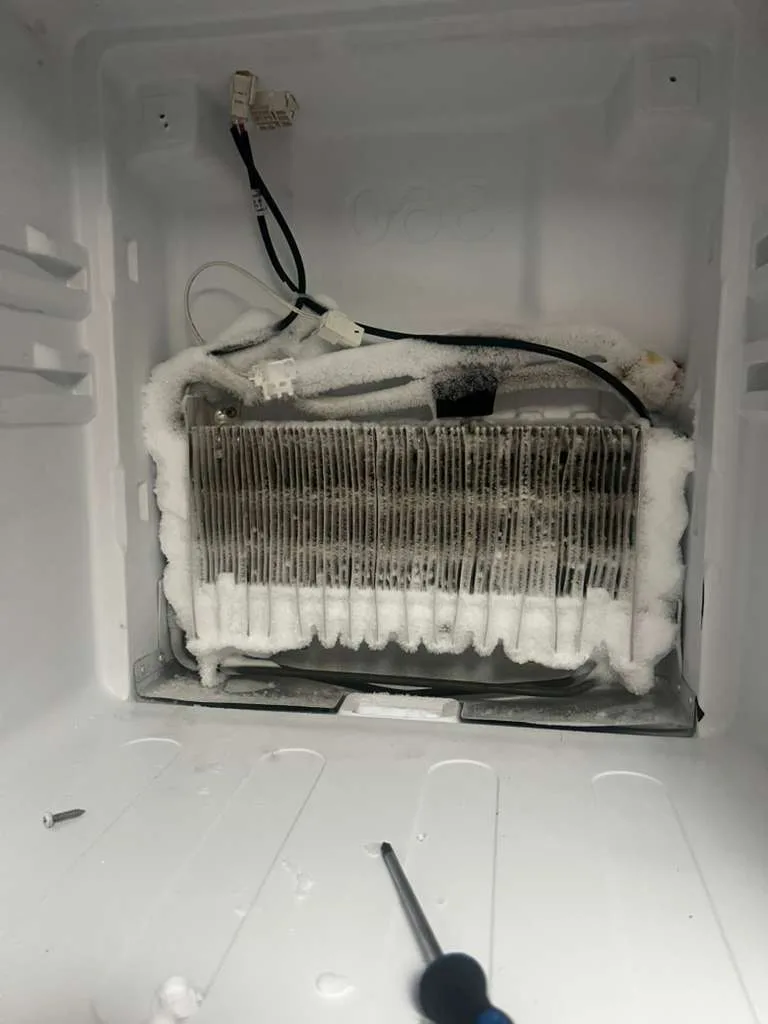
Nearly all of them, because the parts that fail on RV appliances are the accessible ones rather than the sealed ones.
Control boards, thermistors, igniters, door seals, drive belts, water valves, thermal fuses and wiring connections are the components that actually wear out, and every one of them is reachable from inside the coach with the appliance in place. That is the reason mobile service works on appliances in a way it does not on, say, a transmission.
The genuine exceptions are sealed assemblies. An absorption refrigerator's cooling unit is welded steel tubing charged with ammonia and hydrogen, and once it has leaked there is nothing inside it to adjust. A microwave's magnetron sits behind a high-voltage capacitor in a sealed cavity. Both are replacements rather than repairs.
So the honest split is that most appliance calls finish on the first visit, and the ones that do not are the ones where the answer was never a repair in the first place.
Why does an absorption refrigerator stop cooling?
Because it depends on heat, level and airflow all being right at the same time, and any one of the three will stop it.
An absorption fridge has no compressor. It boils an ammonia solution with a gas flame or an electric element and lets the vapor condense and circulate by gravity, which is why the coach has to be reasonably level for it to work at all. Park on a slope for long enough and the solution pools instead of circulating.
Heat is the second requirement, and the third is the ability to get rid of it again. The flue and the roof vent above the fridge have to move warm air out continuously. A wasp nest in the flue or a blocked upper vent will stop a perfectly healthy fridge, and both are common on a coach that has stood through a Florida summer.
That is why the first checks are level, vent and flue, before anything electrical is opened.
How do you tell a control board fault from a dead cooling unit?
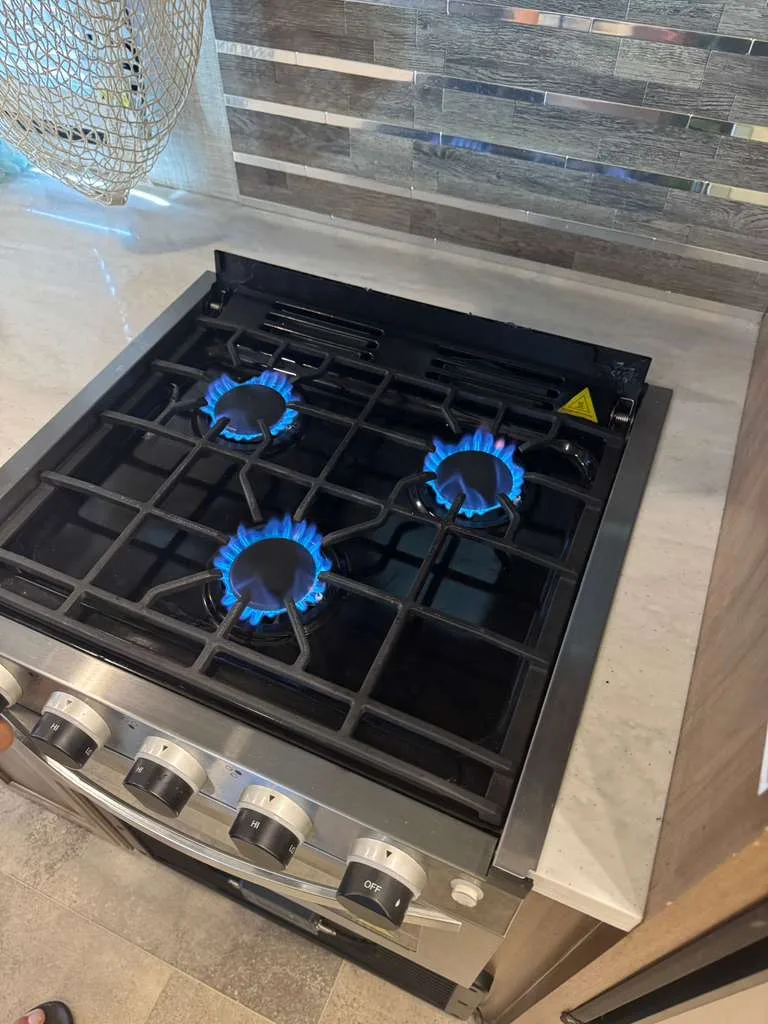
By smell and by heat, before any meter comes out, because the sealed system announces its own failure.
A cooling unit that has lost its charge usually leaves evidence. There is a sharp ammonia smell at the roof vent or behind the fridge, and often a yellow-green residue where the solution has escaped and dried on the tubing. Either of those makes the diagnosis without electronics, and neither can be fixed.
If there is no smell and no residue, the fault is upstream. A board that has failed will typically not fire the burner or energize the element at all, while a thermistor that has drifted lets the fridge run but never reach temperature, or freeze everything solid.
The distinction matters because one of those is an inexpensive component and the other is the most expensive job on the appliance list.
What does Florida heat do to an RV refrigerator?
It removes the margin the appliance was designed with, which is why the same fridge behaves differently here than it did up north.
An absorption fridge is rated to hold a temperature difference against ambient, not to reach a fixed number. When the coach interior sits in the nineties, a unit that was perfectly adequate in cooler weather can no longer pull the box down far enough, and nothing is technically broken.
The first symptom is usually not the food compartment. It is the icemaker slowing or stopping, because the mold thermostat needs a lower temperature than the fridge does to complete a cycle. Our page on refrigerators that stop cooling goes through that in order.
Adding a vent fan behind the coils, clearing the flue and shading the fridge side of the coach all buy back real margin, and they are cheaper than any part in the appliance.
Is a residential refrigerator conversion a better answer?
It is a genuinely good answer for some coaches and a poor one for others, and the deciding factor is electrical rather than culinary.
A household refrigerator holds a lower and steadier temperature than an absorption unit and is far less bothered by Florida heat. What it needs in exchange is continuous alternating current, which means an inverter sized for it and a battery bank that can carry it overnight without help.
On a coach with lithium batteries and a decent inverter, the conversion is straightforward and most owners are pleased with it. On a coach with a pair of tired lead-acid batteries it converts a fridge problem into an electrical system problem, and the fridge stops every time the bank sags.
The other consideration is weight and door swing, both of which are worth checking before anything is ordered rather than after.
What goes wrong with RV washer-dryer combos?
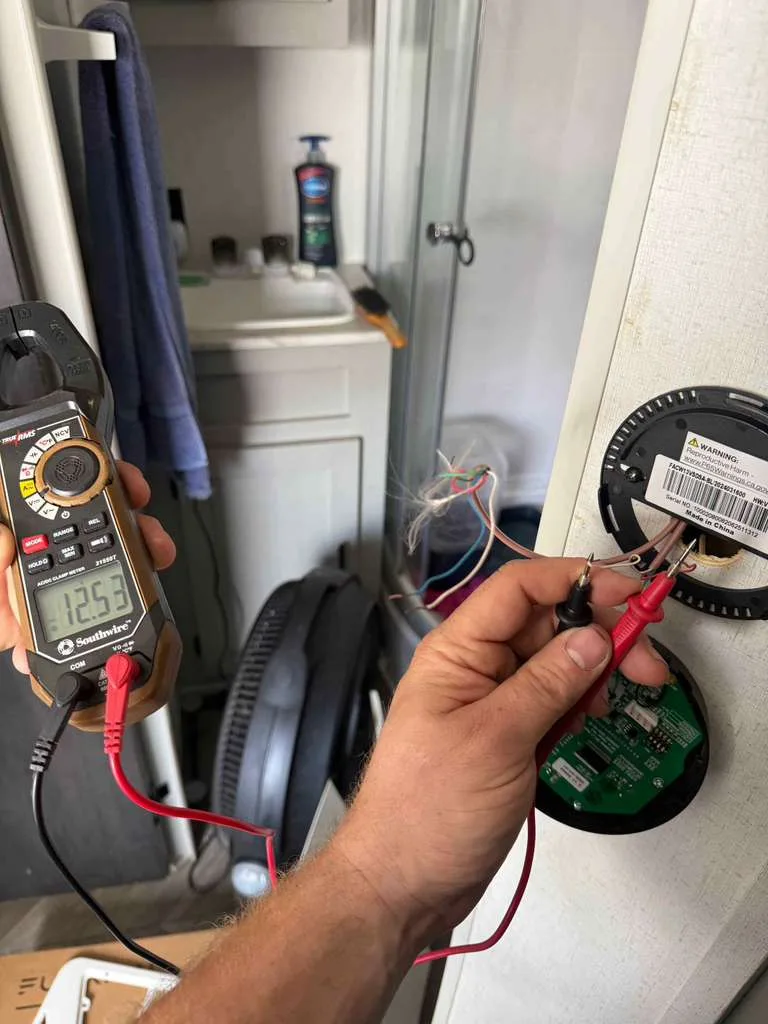
Drainage, water supply and door seals, in that order, and only rarely the motor everyone worries about.
A combo unit that will not finish a cycle is usually failing to drain rather than failing to spin. RV gray tanks fill faster than owners expect and a full tank backs the machine up, which reads on the panel as a fault in the machine. Checking the tank level first resolves a surprising share of these calls.
Water supply is the second suspect. These units want steady pressure, and a coach running on its pump gets pressure only in bursts, so a machine that works on a campground hookup and misbehaves off it is reporting the water system rather than itself.
Door seals are the third, and they are a consumable. A seal that has hardened leaks on the spin cycle and is a straightforward replacement.
Why are RV microwaves replaced rather than repaired?
Because the parts that fail are inside a high-voltage cavity that is not economic to open, and the unit is a standard size.
A microwave that hums but does not heat has almost always lost its magnetron or its high-voltage diode. Both sit behind a capacitor that holds a dangerous charge after the unit is unplugged, and neither is a component anyone should be probing at a campsite.
The economics settle it. RV microwaves are built to a small number of cabinet openings, so a replacement usually drops into the existing hole with the same trim kit and the same wiring. The labor to source and fit an internal part exceeds the cost of the whole appliance in most cases.
The one repair worth making is the door switch. A microwave that is completely dead often has a failed interlock switch rather than a failed magnetron, and that is a cheap part in an accessible place.
What should you check before calling for appliance service?
Four things, all of which take a few minutes and any of which can turn a service call into no call at all.
First, confirm the appliance has power in the mode it is failing in. A fridge that works on gas and not on electric is telling you about the coach's supply rather than the fridge, and the same is true in reverse. Our electrical page covers what is safe to check yourself.
Second, look at the roof vent and the flue behind the fridge for nests and debris. Third, check the coach is roughly level, because an absorption unit will not run reliably on a slope. Fourth, on a washer, check the gray tank.
If all four are clear, the fault really is in the appliance, and knowing that in advance makes the visit shorter and the diagnosis faster.
What Does Mobile RV Appliance Repair Cost?
These are typical ranges for mobile service across Florida. A brief description of what's included is in the Notes column.
| Service | Typical Range | Notes |
|---|---|---|
| Service call (trip + 1st hour diagnosis/labor) | $299 - $399 | All-in for getting us to your site + first hour on any job. Exact rate confirmed at booking; varies by location. |
| Refrigerator cooling unit regas / rebuild | $320 - $750 | Absorption unit; ammonia system |
| Refrigerator cooling unit replacement | $650 - $1,600 | Full unit swap; 3-way or 2-way |
| Stove / oven igniter and burner | $95 - $280 | Piezo, electrode, or regulator |
| Microwave replacement | $165 - $420 | Convection OTR units; wiring included |
| Washing machine (pump / belt) | $135 - $360 | Stackable or combo units |
| Water heater (see plumbing) | See plumbing section | Gas, electric, or on-demand |
| Furnace (see AC/Heating) | See AC/Heating section | Propane forced-air furnaces |
Service call (trip charge + first hour) is $299-$399 depending on location - confirmed when you book. Repair line items below are national averages for mobile service (2025 data) and represent labor + parts after the first hour. Call (888) 702-6880 for an exact quote.
Appliance questions RV owners ask us
Can you replace a cooling unit at my campsite?
Yes, and it is one of the longer jobs we do on site. The fridge comes out of its opening, the old sealed unit is separated from the box and the new one is fitted and re-insulated. It takes most of a day and it does not require the coach to be moved anywhere.
My fridge works on propane but not on electric. Is that the fridge?
Usually not. Everything except the heat source is shared between the two modes, so a fault on one side only points at that side's supply - the element and its thermal fuse on electric, or the burner and gas train on propane. It is one of the more useful symptoms an owner can report.
How long should an RV refrigerator last in Florida?
Less than the same unit would last in a cooler state, because heat is what wears the sealed system. Vent maintenance and airflow make more difference to that number than the brand does, and a fridge that has always had a clear flue and a working vent fan outlasts one that has not.
Is it worth repairing an older RV refrigerator?
It depends entirely on which part failed. Boards, thermistors and igniters are worth doing on almost any age of unit. A cooling unit on an old fridge is the point at which replacing the whole appliance or converting to residential deserves a serious look.
Do you service Dometic and Norcold?
Both, along with the other brands fitted to coaches sold in this state. The failure patterns differ slightly between them but the diagnostic order is the same, and parts availability is rarely the limiting factor on either.
What if my icemaker stopped but the fridge is fine?
That is usually the water side rather than the icemaker, and it is a common first sign that the freezer is not quite cold enough. The branch line to the icemaker is long, thin and rarely used, which makes it the part of the plumbing most likely to block or freeze.
Sources
- Dometic - product support - Manufacturer service documentation for RV refrigerators, cooktops and appliances.
- Dometic - documents database - Manuals covering absorption refrigerator operation, venting and fault codes.
- Suburban - RV appliances - Documentation for RV ranges, ovens and water heating appliances.
- US Fire Administration - fire prevention - Why a blocked flue on a gas appliance is a safety issue rather than only a performance one.